
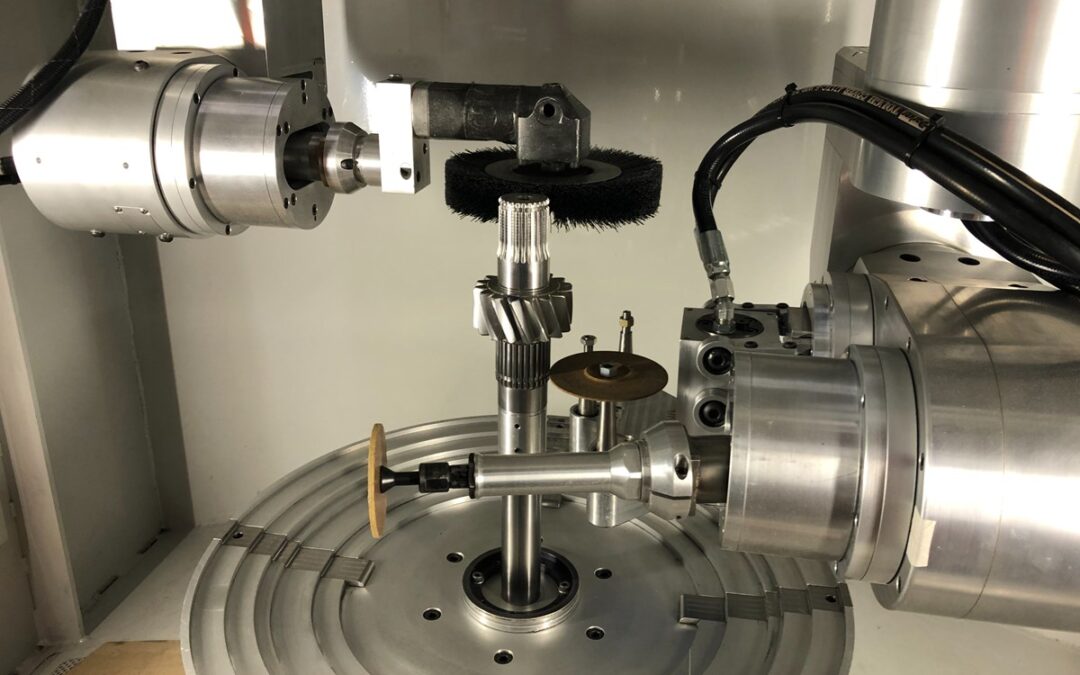
Advanced CNC chamfering has become a cornerstone of high-precision aerospace manufacturing, playing an essential role in the performance, reliability, and safety of fastener heads used in aircraft structures. Aerospace fasteners endure extreme conditions—vibration, temperature fluctuations, shear forces, and mechanical stress that would quickly compromise low-quality components. Chamfering, once considered a simple finishing step, is now a highly engineered process supported by multi-axis CNC machines, specialized tooling, and digitally optimized toolpaths. These advances ensure that every fastener head meets stringent aerospace standards for dimensional integrity, uniformity, and fatigue resistance. With search engines prioritizing expertise-driven content and industry authority, detailed insights into precision chamfering resonate strongly with engineers, procurement specialists, and aerospace manufacturers seeking reliable, high-performance machining solutions.
The most significant advantage of modern CNC chamfering lies in its ability to create consistent edge geometries that enhance structural integrity. Fastener heads must blend seamlessly with the mating surface to distribute load evenly across assemblies such as aircraft wings, fuselage skins, turbine housings, and control systems. An improperly formed chamfer can introduce micro-stress points, weaken structural joints, and increase the risk of long-term fatigue. CNC-controlled chamfering eliminates these inconsistencies by producing perfectly symmetrical angles, uniform bevel widths, and smooth transitions between the head and shank. Advanced machines use adaptive motion systems, high-speed spindles, and rigid tooling to maintain dimensional conformity across thousands of parts. Even when machining high-toughness materials such as titanium, Inconel, A286, or aerospace-grade stainless steel, CNC chamfering delivers accurate, burr-free edges essential for maintaining aerodynamic surfaces and reducing wear during assembly.
The evolution of tooling technology has further elevated the precision achievable in aerospace chamfering. Aerospace fasteners demand micro-edge quality that cannot be produced reliably with conventional cutting tools. Modern chamfering operations rely on advanced carbide tools with PVD coatings, multi-flute geometries, and optimized clearance angles designed to reduce chatter and prevent heat buildup. These cutting tools maintain edge sharpness over long production cycles, ensuring consistent chamfer depth and surface finish. In automated CNC environments, tool wear monitoring systems measure tool condition in real time, adjusting cutting parameters or triggering automatic tool changes before any dimensional deviations occur. These systems reduce scrap, ensure compliance with aerospace material certification requirements, and maintain the predictable machining environment that OEMs and Tier-1 suppliers depend on. The resulting chamfered fastener heads exhibit exceptional accuracy, ideal mating geometry, and long-term durability in high-stress assemblies.
Digital integration has become one of the most transformative aspects of advanced CNC chamfering for aerospace fasteners. Engineers now rely on CAD/CAM platforms to model fastener geometries, simulate chamfering toolpaths, and optimize cutting parameters before machining even begins. Digital twins replicate the entire process in a virtual environment, identifying potential issues related to tool engagement, thermal expansion, or stress distribution. This simulation-driven workflow reduces machining time, increases production throughput, and minimizes tooling costs by eliminating trial-and-error methods. CAM systems also generate multi-axis toolpaths capable of machining complex chamfer profiles, including compound angles, countersinks, radiused transitions, and proprietary aerospace chamfer structures designed for advanced aerodynamic and structural performance. These digital tools support the precision and repeatability that aerospace regulatory frameworks demand, making CNC chamfering not just a machining operation but a fully integrated engineering solution.
In addition to performance and precision, modern CNC chamfering significantly enhances the efficiency and scalability of aerospace fastener production. Traditional methods relied heavily on manual finishing, which created opportunities for variation and demanded extensive inspection resources. CNC automation eliminates these inefficiencies by synchronizing the chamfering process with upstream and downstream machining steps. Robotic part loading, automated tool changes, in-process probing, and high-speed machining cycles combine to create a continuous and highly optimized manufacturing flow. This reduces cycle times, lowers labor costs, and ensures fasteners meet AS, NAS, and MS aerospace standards consistently across large production volumes. Real-time inspection systems integrated directly into CNC machines verify chamfer depth, angle, and roundness, ensuring complete compliance with aerospace quality specifications. These advancements allow manufacturers to meet growing demand for high-strength fasteners used in next-generation aircraft, hybrid propulsion systems, and lightweight structural assemblies.
The future of aerospace fastener manufacturing is inseparable from the continued evolution of CNC chamfering technologies. As aircraft designs pursue lighter weight, higher fuel efficiency, and increased mechanical durability, fastener geometries will become even more specialized. CNC chamfering provides the flexibility needed to adapt to new material types, complex head profiles, and advanced structural requirements without sacrificing production efficiency or dimensional control. Whether producing titanium fasteners for high-temperature turbine environments, aluminum fasteners for lightweight structures, or hybrid-material fastening solutions for composite airframes, precision chamfering ensures every component performs reliably throughout an aircraft’s service life. For manufacturers seeking a competitive edge in a demanding global market, investing in advanced CNC chamfering capabilities means achieving superior product quality, meeting rigorous aerospace standards, and delivering the high-performance fasteners essential to modern aviation engineering.