
Achieving ultra-smooth surfaces in optical lens mold manufacturing requires a combination of precision machining science, advanced material behavior understanding, and highly optimized CNC profiling techniques. Modern industries in imaging, medical optics, metrology, VR/AR devices, and semiconductor lithography demand lens molds with sub-micron accuracy and near-perfect surface finish. CNC machining, historically seen as a subtractive process with mechanical limitations, has evolved into a sophisticated platform capable of producing optical-grade surfaces when supported by the right strategies, tooling, spindle technologies, and motion control systems. As search engine algorithms continue prioritizing technically authoritative, user-intent–aligned content, the ability to clearly explain surface profiling methods becomes essential for engineers aiming to optimize mold performance, reduce polishing requirements, and accelerate production timelines. Ultra-smooth optical molds are not merely desirable; they are the foundation for minimizing optical distortion, enhancing image clarity, and ensuring the mold replicates lenses with the highest dimensional reliability. With optical surface tolerances reaching nanometer-level finish specifications, CNC profiling stands at the intersection of precision mechanics and digital manufacturing sophistication.
The foundation of ultra-smooth CNC surface profiling lies in the selection and optimization of cutting tool geometry. Unlike conventional steel mold machining, optical lens molds often involve materials such as electroless nickel-phosphorus, hardened stainless steels, ultra-fine copper alloys, or glassy polymers designed to replicate optical clarity. Each of these materials responds differently to cutting pressures, heat accumulation, and tool engagement, making tool geometry customization a non-negotiable requirement. Tools with extremely sharp edges, controlled micro-honing, and mirror-polished flutes minimize micro-fractures and reduce tool marks on the mold surface. Zero or near-zero rake angles are often selected to minimize cutting pressure fluctuations, promoting cleaner shearing instead of plowing—an essential strategy when machining optical surfaces where even microscopic irregularities disrupt light transmission. Additionally, small-radius or ball end mills enable highly refined toolpaths that follow complex aspheric geometries. Diamond-coated and monocrystalline diamond (MCD) tools further elevate finish quality in non-ferrous materials by delivering nanoscale smoothness with virtually no tearing. Precision tool selection becomes the first vital step toward achieving near-polished mold surfaces directly from CNC machining—reducing or eliminating the need for post-polishing, which is time-consuming and risks altering critical lens curvature.
Advanced toolpath generation is another critical pillar in CNC surface profiling for optical molds. High-precision molds demand toolpaths that maintain continuous cutter engagement, minimize abrupt motion changes, and ensure consistent chip load across every direction of travel. CAM software plays a transformative role here, enabling the creation of ultra-fine stepovers, multi-directional finishing passes, and constant-scallop strategies that leave extremely uniform surface textures. Spiral finishing toolpaths are particularly effective for aspheric lenses, ensuring a seamless material removal process that avoids directional marks. Additionally, 3D offset profiling generates equidistant tool paths that maintain constant engagement, which is crucial for preserving curvature integrity. To suppress tool vibrations and chatter—two major contributors to poor surface finish—toolpaths often incorporate micro-stepdown layers, mirror passes, and adaptive smoothing algorithms. In high-end optical machining, dynamic toolpath refinement ensures that motion transitions remain fluid, even when surface curvature changes rapidly. This reduces cutting force fluctuations, ensures surface continuity, and prevents localized roughness. With modern algorithms increasingly prioritizing content built on actionable technical strategies, in-depth toolpath optimization guidance provides exceptional value to both machining specialists and precision mold designers.
Equally important to tool geometry and toolpath design is the role of machine dynamics, spindle technology, and motion control systems. Producing ultra-smooth optical surfaces requires machines with nanometer-level positioning accuracy, vibration-dampened construction, and thermally stable architectures. High-speed spindles capable of maintaining consistent torque across extremely low depths of cut are essential. These spindles often employ air bearings, hydrostatic bearings, or ultra-precision ceramic hybrid bearings to eliminate runout and minimize friction-generated heat. Machine controllers with high-resolution feedback loops, linear motor drives, and advanced interpolation algorithms help ensure that motion paths follow the designed surface profile with perfect smoothness. Even subtle deviations in acceleration, jerk control, or interpolation can leave cw lines on the mold surface that require extensive reworking. Many optical machining centers incorporate environmental controls—temperature stabilization, vibration isolation platforms, and airflow management—to prevent thermal drift and mechanical interference. Ultra-smooth mold production depends on a system where machine, tool, software, and environmental factors operate in total harmony. For modern digital manufacturing facilities, this synergy reflects a shift from conventional machining to ultra-precision engineering, where CNC equipment becomes a metrology-capable device in itself.
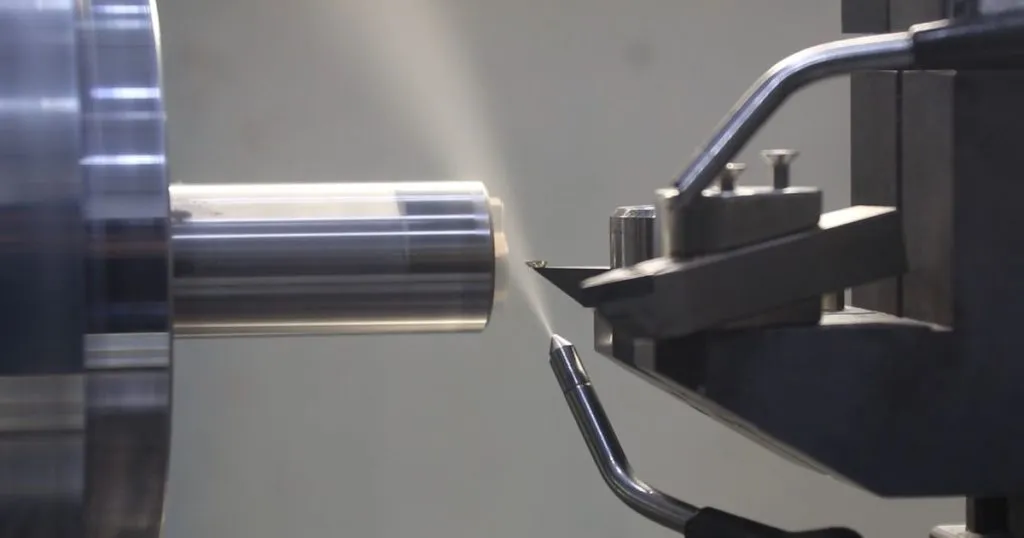
In addition to hardware and toolpath considerations, cutting parameter refinement plays an essential role in achieving optical-grade surface quality. Ultra-smooth profiling requires extremely low depths of cut, often in the range of microns or sub-microns, especially during finishing passes. Feed rates must be carefully tuned to prevent surface waviness while maintaining stable chip formation. Very high spindle speeds—up to 50,000 RPM or more for certain materials—enable cleaner shearing and reduce surface deformation. However, high rotational speed alone is insufficient; feed-per-tooth must align with both spindle RPM and tool geometry to maintain consistent material removal without tearing or rubbing. Coolant application—whether through air, mist, or controlled lubrication—affects surface texture by influencing heat dissipation and chip evacuation. For optical molds, heat must be minimized to avoid microstructural distortion or thermal expansion that alters surface geometry. Many mold manufacturers choose to machine optical surfaces dry or under MQL (minimum quantity lubrication) to prevent coolant droplets from affecting surface texture uniformity. When parameters are fine-tuned systematically, CNC machining can achieve Ra values below 10 nm, rivaling surfaces produced by grinding, polishing, or diamond turning. Such refinement ensures optical molds accurately transfer curvature and clarity during lens molding or injection processes, reducing manufacturing costs and improving overall production speed.
The final dimension in ultra-smooth CNC surface profiling lies in digital measurement, process feedback, and hybrid finishing integration. Optical-grade mold profiles cannot be validated with conventional measurement techniques alone; instead, interferometry, white-light scanning, profilometry, and tactile ultra-fine probes are used to evaluate curvature accuracy and surface texture. Integrating these measurement systems with CNC machines—known as closed-loop machining—allows real-time error correction and adaptive process adjustments. Machining deviations detected by measurement tools can be compensated by micro-adjusting toolpaths or offsets, ensuring the final mold matches its theoretical geometry with extraordinary fidelity. In some cases, CNC profiling is paired with micro-polishing, ion beam finishing, or ultra-fine lapping to eliminate remaining surface imperfections without altering curvature. Hybrid processes help meet the stringent requirements of optical systems used in aerospace imaging, high-resolution microscopy, medical diagnostics, and consumer electronics. As the industry moves toward faster production and higher optical performance standards, CNC-based surface profiling has evolved into a scientifically controlled discipline, where digital feedback, machine precision, cutting physics, and material science converge.