
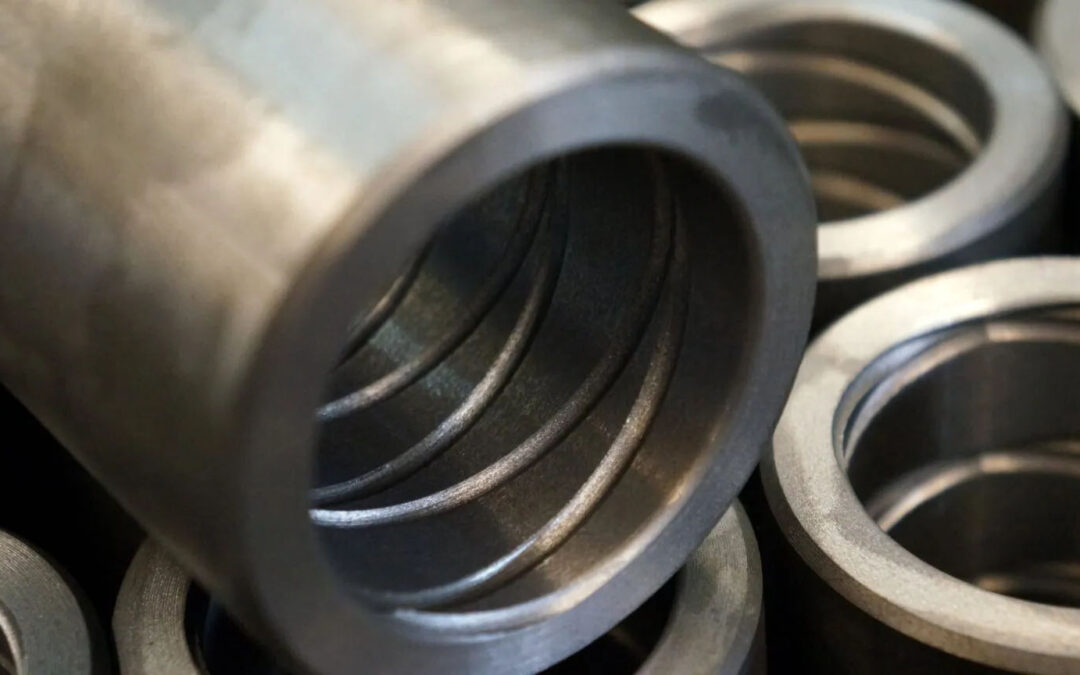
High-accuracy CNC spiral grooving techniques play a critical role in the manufacturing of hydraulic cylinder rods, which are core components in heavy machinery, industrial automation, construction equipment, marine systems, and advanced fluid power applications. The spiral grooves machined into hydraulic rods serve essential functional purposes, including controlled lubrication distribution, debris evacuation, pressure balancing, and friction optimization during reciprocating motion. Any deviation in groove depth, pitch consistency, surface finish, or concentricity can lead to premature seal failure, fluid leakage, uneven wear patterns, and catastrophic system inefficiency. As hydraulic systems evolve toward higher operating pressures, faster cycle speeds, and longer service intervals, the manufacturing precision required for spiral grooving continues to rise. Modern CNC technology enables manufacturers to maintain extremely tight tolerances across long rod lengths while achieving uniform groove geometry that remains stable under thermal load, pressure fluctuations, and continuous dynamic stress. The alignment between advanced CNC kinematics, spindle stability, and predictive toolpath control has transformed spiral grooving from a highly sensitive manual process into a digitally driven, repeatable, and production-optimized operation that defines the reliability of contemporary hydraulic motion systems.
The technical complexity of spiral grooving on hardened or surface-treated cylinder rods demands absolute control over cutting forces, tool engagement angles, and synchronized rotary and linear motion. Hydraulic rods are commonly produced from high-strength alloy steels, chrome-plated substrates, or induction-hardened materials that present extreme resistance to deformation and tool wear. CNC spiral grooving machines must therefore balance high material removal stability with ultra-fine depth control to avoid micro-cracking, surface tearing, or sub-surface stress concentration. Advanced interpolation algorithms allow the CNC controller to synchronize rotational axis motion with linear feed at sub-micron resolution, ensuring absolute pitch uniformity and constant groove depth across the entire rod length. This synchronization is further enhanced by adaptive feed control systems that compensate in real time for material hardness variation, thermal expansion, and tool edge degradation. Precision-ground grooving inserts with specialized coatings are used to maintain cutting edge integrity under high contact stress, while micro-lubrication delivery systems ensure thermal equilibrium at the cutting interface. Together, these technologies enable high-accuracy CNC spiral grooving to achieve geometric fidelity and surface integrity levels that directly determine seal performance, lubrication efficiency, and operational longevity of hydraulic cylinder assemblies.
Surface integrity and dimensional stability represent two of the most critical performance factors in CNC spiral grooving for hydraulic rods, and both are directly influenced by machine rigidity, vibration control, and environmental stability. Any harmonic vibration introduced during grooving can generate waviness along the groove profile, disrupting fluid flow and increasing localized seal abrasion. To eliminate this risk, modern CNC grooving systems utilize ultra-rigid machine structures, hydrostatic guideways, thermally stabilized spindle assemblies, and precision-balanced rotary axes that suppress micro-vibration across wide speed ranges. Temperature management is equally essential, as even minute thermal drift across extended grooving cycles can alter groove geometry over long rod sections. Climate-controlled machining environments, integrated coolant temperature regulation, and real-time thermal compensation software ensure dimensional consistency from the rod entry point to its final exit. Additionally, in-process measurement systems monitor groove depth, width, and pitch without interrupting the machining cycle, allowing automatic tool offset adjustments that preserve micron-level accuracy throughout long production runs. This closed-loop control structure ensures that every hydraulic cylinder rod leaving the machining cell meets strict dimensional conformity and functional surface performance standards.
The economic and operational efficiency of high-accuracy CNC spiral grooving extends far beyond dimensional precision, directly affecting production scalability, quality consistency, and long-term manufacturing profitability. Traditional spiral grooving methods often relied on highly skilled manual operators, slow feed rates, and extensive post-processing inspection to ensure acceptable results. These approaches limited throughput and introduced variation across production batches. In contrast, modern CNC spiral grooving systems enable continuous unattended operation with stable process windows that deliver consistent output regardless of production volume. High-rigidity workholding systems ensure that long hydraulic rods remain perfectly aligned during synchronized rotation and linear travel, eliminating bending-induced groove distortion. Tool life management algorithms predict optimal insert replacement intervals, preventing sudden surface degradation and minimizing downtime. By maintaining groove accuracy at higher spindle speeds and aggressive feed rates, manufacturers significantly reduce cycle times while preserving strict dimensional requirements. This combination of speed, accuracy, and repeatability allows hydraulic component suppliers to meet global demand while maintaining quality consistency across thousands of identical rod assemblies.
Looking toward the future, the evolution of high-accuracy CNC spiral grooving techniques for hydraulic cylinder rods is being driven by artificial intelligence, digital twin simulation, and smart sensor integration. AI-based process optimization platforms are beginning to analyze vast datasets generated from spindle load, vibration frequency, thermal drift, and tool wear patterns to continuously refine grooving parameters in real time. Digital twins allow engineers to simulate groove formation under varying cutting conditions before actual production begins, drastically reducing setup time and error risk for new rod designs. Embedded force sensors and laser-based in-process metrology systems are transforming spiral grooving into a fully adaptive machining process that responds instantly to material inconsistencies and environmental fluctuations. At the same time, surface engineering advancements such as nano-textured grooves and hybrid grooving-laser finishing techniques are pushing hydraulic performance to unprecedented efficiency levels. As hydraulic systems continue advancing into high-pressure, high-speed, and energy-efficient domains, high-accuracy CNC spiral grooving will remain a foundational manufacturing technology that directly governs reliability, performance, and service life across global industrial infrastructure.