
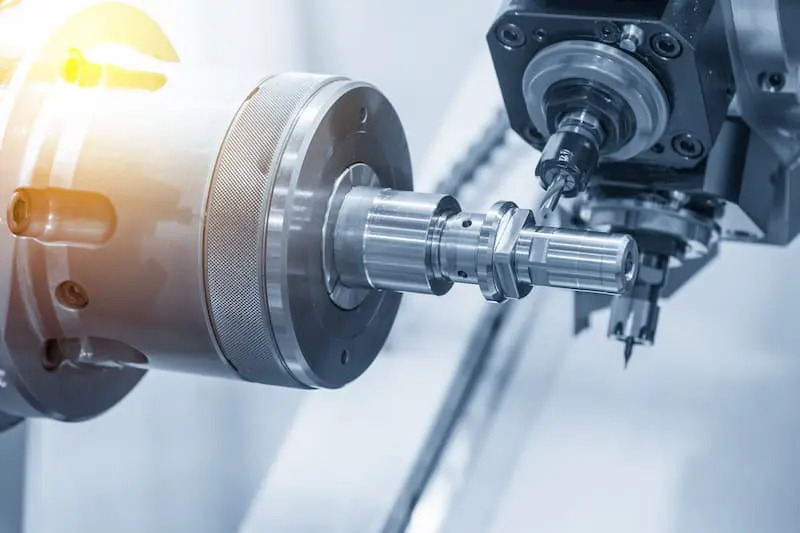
Precision CNC slotting has emerged as one of the most critical machining processes in the production of high-load gearbox coupling components, enabling manufacturers to meet the increasingly stringent performance expectations of industries such as heavy equipment, automotive powertrains, aerospace systems, marine propulsion, and high-torque industrial machinery. As gear-driven assemblies evolve, coupling components are required to handle more torque, resist higher levels of mechanical stress, and maintain alignment under continuous dynamic load. Traditional slotting methods struggle to meet these demands with the accuracy, repeatability, and structural integrity required for modern applications. Precision CNC slotting, in contrast, provides a controlled, automated, and highly optimized machining workflow that delivers the perfect balance of dimensional accuracy, surface quality, and structural consistency. This makes it an essential technology for producing keyways, spline slots, torque-transfer interfaces, and mating profiles that must perform flawlessly even under extreme load conditions. In line with today’s SEO standards emphasizing experience, technical expertise, and relevance, a detailed discussion of CNC slotting demonstrates both authority and deep industry insight for readers seeking advanced engineering solutions.
The strength and reliability of a gearbox depend heavily on the accuracy of its coupling components, particularly the slots that transfer rotational force from one shaft to another. When these slots are cut with even slight deviation, the entire powertrain can become vulnerable to backlash, misalignment, vibration, and premature wear. Precision CNC slotting eliminates these risks by utilizing computer-controlled motion systems capable of executing cutting paths with micron-level precision. Modern slotting machines rely on rigid frames, vibration-dampening construction, high-torque spindles, and advanced servo systems that maintain stability even during aggressive material removal. This ensures that slot profiles remain perfectly aligned along the part’s centerline, maintaining consistent geometry across every production cycle. Manufacturers can produce slots with exceptionally tight tolerances, ensuring that torque is distributed evenly across contact surfaces and preventing localized stress points that could lead to catastrophic mechanical failure. This precision is especially important in high-load gearbox applications where torque spikes, heavy directional changes, or long operating hours push mechanical components to their limits.
High-load gearbox coupling components also require materials that can withstand extreme conditions. These materials—such as hardened alloy steels, tool steels, nickel-based alloys, and high-strength stainless steels—are notoriously difficult to machine. CNC slotting overcomes these challenges by combining optimized feed rates, high-speed cutting strategies, and state-of-the-art tool coatings designed to resist wear and heat. Carbide tooling, PVD coatings, and modern cutter geometries help maintain cutting edge integrity during prolonged machining cycles. Meanwhile, coolant delivery systems control thermal expansion, ensuring that slot dimensions remain accurate even when machining heat-resistant alloys. Advanced CNC programs continuously monitor spindle load, cutting temperature, and tool wear to automatically adjust parameters in real time. This adaptive machining approach reduces scrap, prevents micro-cracking, and ensures the long-term durability of slot profiles. In heavy-duty gearboxes used for mining equipment, wind turbines, industrial presses, or marine propulsion drives, this level of reliability is essential. When coupling slots maintain their structural integrity over thousands of load cycles, operators experience fewer breakdowns, smoother torque transfer, and significantly longer equipment lifespan.
Equally important to the success of CNC slotting is the integration of advanced digital workflows and CAM programming. Today’s precision manufacturing relies on CAD-driven design, simulation-based machining strategies, and continuous data feedback between digital models and CNC controls. For gearbox coupling components, engineers often begin by creating finite element models to analyze load distribution, torque pathways, and stress concentrations. These digital insights inform the exact geometry required for each slot, ensuring that the coupling interface can withstand real-world conditions before machining even begins. CAM systems then generate optimized toolpaths, ensuring chip evacuation, cutter stability, and smooth transitions across slot depths and profiles. Multi-axis slotting machines can handle complex geometries such as tapered keyways, involute spline profiles, offset slots, and custom torque-transfer patterns. Digital twins simulate the machining process so that potential tool collisions, stress points, and inefficiencies are corrected before production. This integration of digital engineering and physical machining enhances accuracy, reduces production time, and ensures regulatory compliance for industries that require documented machining processes and consistent part traceability.
Precision CNC slotting also creates new opportunities for innovation in gearbox design. As engineers push for more compact, higher-torque systems, slot geometries become more complex and materials become more demanding. CNC slotting provides the flexibility needed to explore new approaches without sacrificing manufacturability. For example, variable-depth slots can be machined to optimize torque transfer efficiency while reducing overall weight. Multi-slot configurations enable smoother rotational engagement and improved torque stability in systems where constant directional changes generate fluctuating load conditions. With the repeatability of CNC, manufacturers can produce custom slot configurations tailored to specialized coupling designs or niche industrial applications. This flexibility has fueled advancements in lightweight electric vehicle gearboxes, aerospace drives, and next-generation automation systems. By eliminating constraints imposed by older machining methods, CNC slotting allows engineers to design high-performance components that offer both mechanical superiority and reduced production costs.
From a production standpoint, CNC slotting also significantly improves scalability and operational efficiency. Traditional slotting methods often require manual adjustments, multiple setups, and slow cutting speeds. CNC automation streamlines these processes, enabling manufacturers to achieve high throughput without compromising precision. Automated tool changers, robotic loading systems, in-process inspection, and closed-loop feedback systems reduce downtime and ensure consistent output across large production batches. Quality control can be integrated directly into the machining cycle, with machine vision systems or probing routines inspecting slot dimensions during production. This minimizes rejection rates and ensures that each gearbox coupling component meets exact engineering requirements. For industries operating under strict regulatory frameworks—such as aerospace, automotive, and energy production—this repeatability is invaluable. It ensures that every batch of components offers the same performance and reliability, which is essential for maintaining equipment safety and long-term operational stability.
In an era where high-load gearboxes must deliver greater performance with less maintenance, precision CNC slotting stands out as an indispensable technology. Its combination of digital integration, adaptive machining strategies, and material versatility allows manufacturers to produce coupling components capable of handling extreme torque and continuous stress. By ensuring perfect slot geometry, exceptional surface quality, and long-term structural integrity, CNC slotting enhances gearbox efficiency, reduces wear, and prevents mechanical failures that could disrupt operations. As industries continue to embrace automation, electrification, and higher power density in mechanical systems, the demand for precisely machined slotting features will only increase. Companies that invest in advanced CNC slotting capabilities will be positioned to lead the market in quality, performance, innovation, and reliability—delivering components that support the next generation of industrial power systems.